


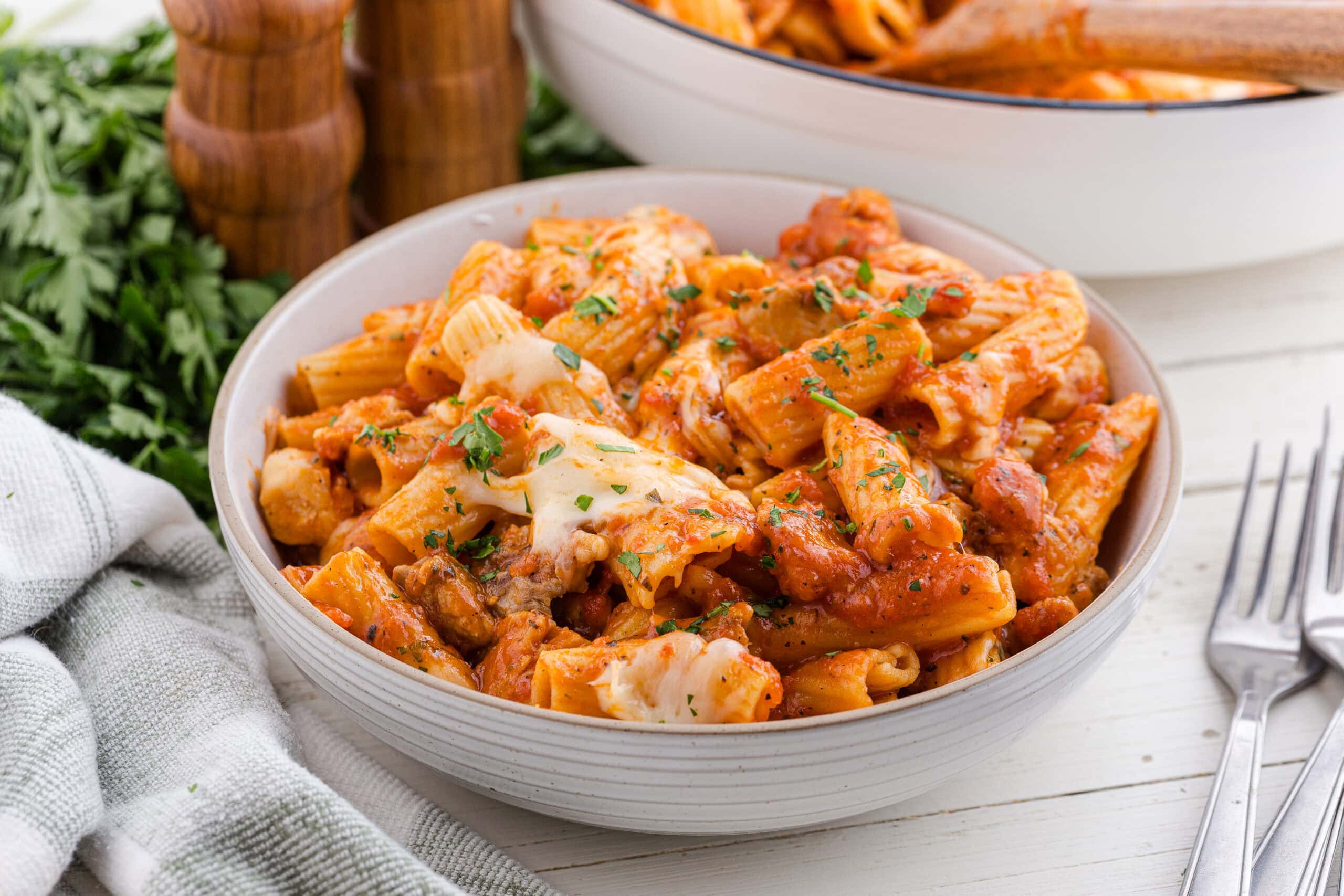
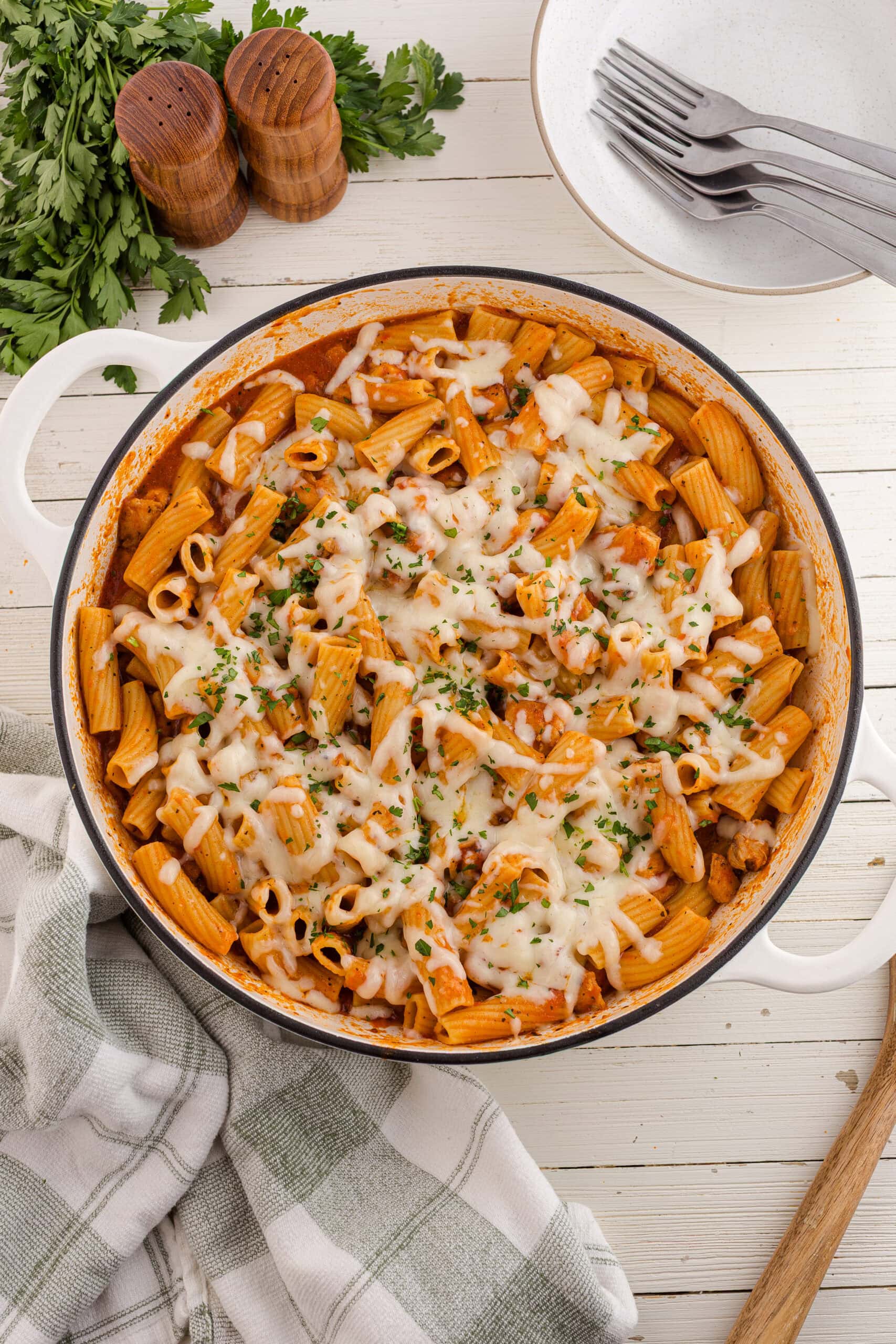
This one pot chicken parmesan pasta recipe is made with juicy chicken, marinara sauce, pasta, and melty cheese all in one pan. It's one of those fun quick dinners that checks every box-easy, comforting, and done in 30 minutes. If you're craving delicious chicken pasta that even a picky eater will enjoy, this is one of the best quick and easy dinner recipes to keep on hand. Pin it now for your favorite one pot dinners, easy pasta recipes, and go-to pasta dinner recipes!

Why this is the best one pot chicken parmesan pasta recipe
This healthy chicken parmesan pasta recipe is simple and easy. Brown the chicken, toss everything in the pot with the chicken, then simmer for a couple of minutes while the pasta cooks. That's all there is to it!
Chicken parmesan pasta is very quick to put together. This is a 30-minute recipe, easily.
This recipe uses just a few common, inexpensive ingredients. This recipe is very simple and uses ingredients you probably already have in your pantry. Chicken, uncooked pasta, marinara sauce, cheese, some spices. That's pretty much all it takes.
Chicken parmesan pasta is healthy. This easy pasta dish is made from mostly whole foods, and there is no added sugar. You can feel good about feeding this pasta to your kids because it's loaded with protein and nutrients! It's still healthy if you add the cheese.
This recipe is allergy-friendly and appropriate for special diets. This recipe, as written, contains dairy and gluten, but it is easy to modify. It is nut-free, egg-free, and soy-free as written. If you leave the cheese out or use vegan cheese, the recipe is dairy-free. You can make it gluten-free by using gluten-free pasta. Because it is made with pasta, this recipe is likely not good for a keto or bariatric diet plan. As always, check the labels on your specific ingredients to ensure they are safe for your personal dietary needs.
What you'll need to make chicken parmesan pasta
Equipment
- Large skillet - This needs to have a tight-fitting lid. A large pot like a Dutch oven would work just as well.
- Instant read thermometer - How else will you know when your chicken is done without overcooking it?
- Garlic press - There is no substitute for the flavor of fresh garlic. If you don't have a press, you can use the flat side of your chef's knife and smash the garlic with your fist, peel off the papery skin, then mince it as finely as possible.
Ingredients
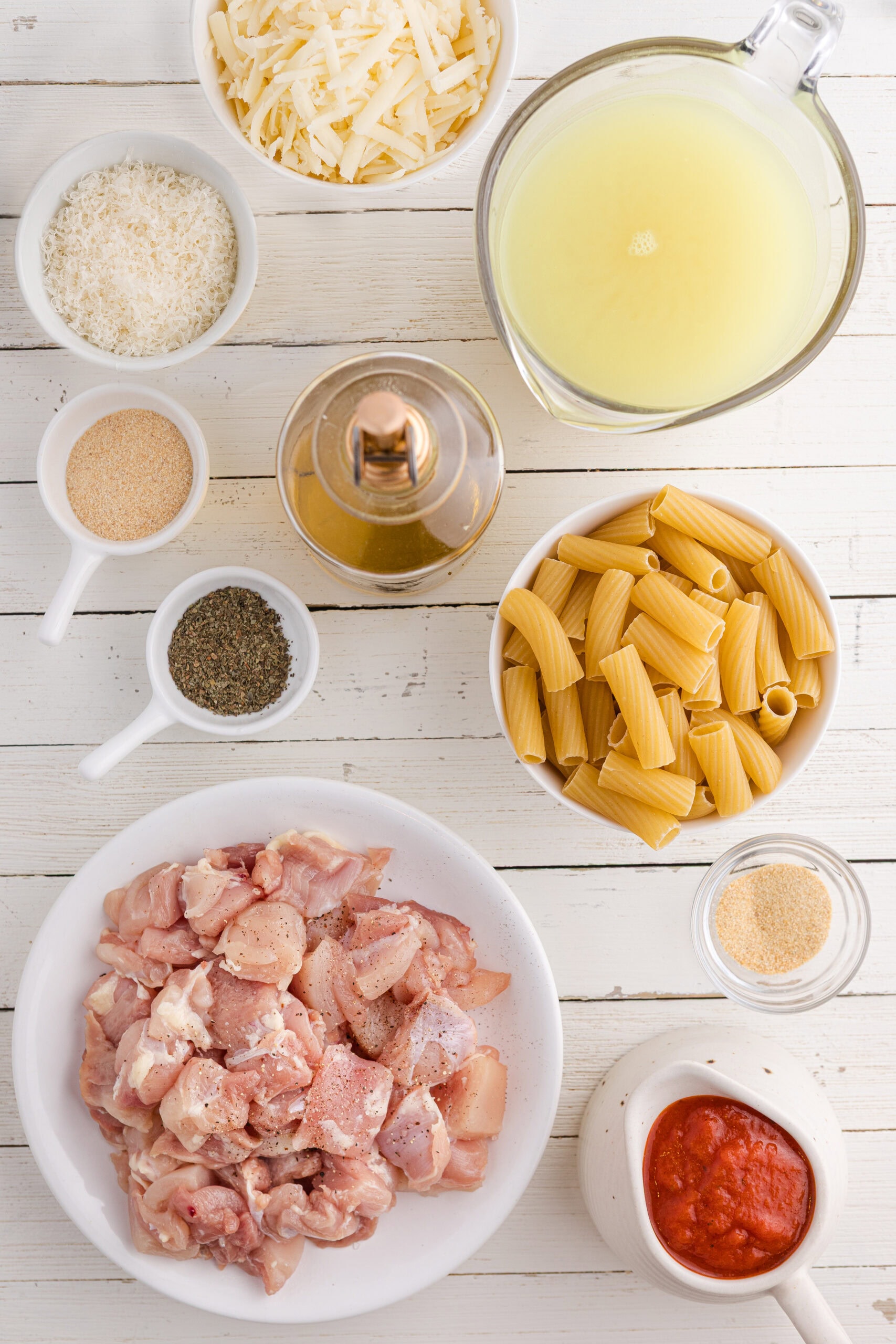
See the printable recipe card at the bottom of the page for all measurements and nutritional information.
- Extra virgin olive oil - This is to brown the chicken. You can use whatever cooking oil you prefer including vegetable oil, coconut oil, avocado oil, and grapeseed oil.
- Boneless skinless chicken thighs - I prefer thighs over breasts for this recipe because they can take a little overheating without getting dry and weird. I always use a meat thermometer (love my Temp Spike!), but because this all cooks in one pot, if the chicken pieces are done before the pasta is soft, the chicken is going to get overcooked. You can also change the protein up and use some meatballs or Italian sausage instead. These will need to be cut into 1-inch pieces.
- Low sodium chicken broth - Switch out for beef broth or vegetable broth if you aren't using chicken.
- Fresh garlic - There is no substitute for fresh garlic. I do not recommend garlic powder in a recipe like this. Buy a bulb and break off a couple of cloves for this recipe. Garlic is very cheap and makes a huge difference in a recipe.
- Onion powder - You won't taste this in the finished pasta, but it adds something that you will miss if you leave it out.
- Italian seasoning - The marinara sauce will have seasoning in it, but I like to add a little extra because I think it's usually too bland.
- Marinara sauce - Any brand and variety will be fine. I don't recommend salting this dish beause the marinara sauce already has plenty of salt in it.
- Uncooked rigatoni pasta - Penne, spaghetti, or any other sturdy tube or long pasta will work for this recipe. However, some cook faster than others, so check the directions for the type of pasta that you choose and try not to overcook the pasta. I don't recommend fine pasta varieties like angel hair as they tend to get soggy and clump.
- Grated Parmesan cheese - This is the actual shaved cheese in the dairy case and not the powdery stuff in a can.
- Shredded mozzarella cheese - You can switch this out for any melty cheese, including cheddar, pepper jack, or colby jack. You may be able to find an Italian blend shredded cheese, and that is really nice in this recipe. I always use more cheese than the recipe suggests. Use as much as the spirit moves you to use.
- Fresh parsley - This is optional and used only for garnish at the end.
How to make chicken parmesan pasta in one pot
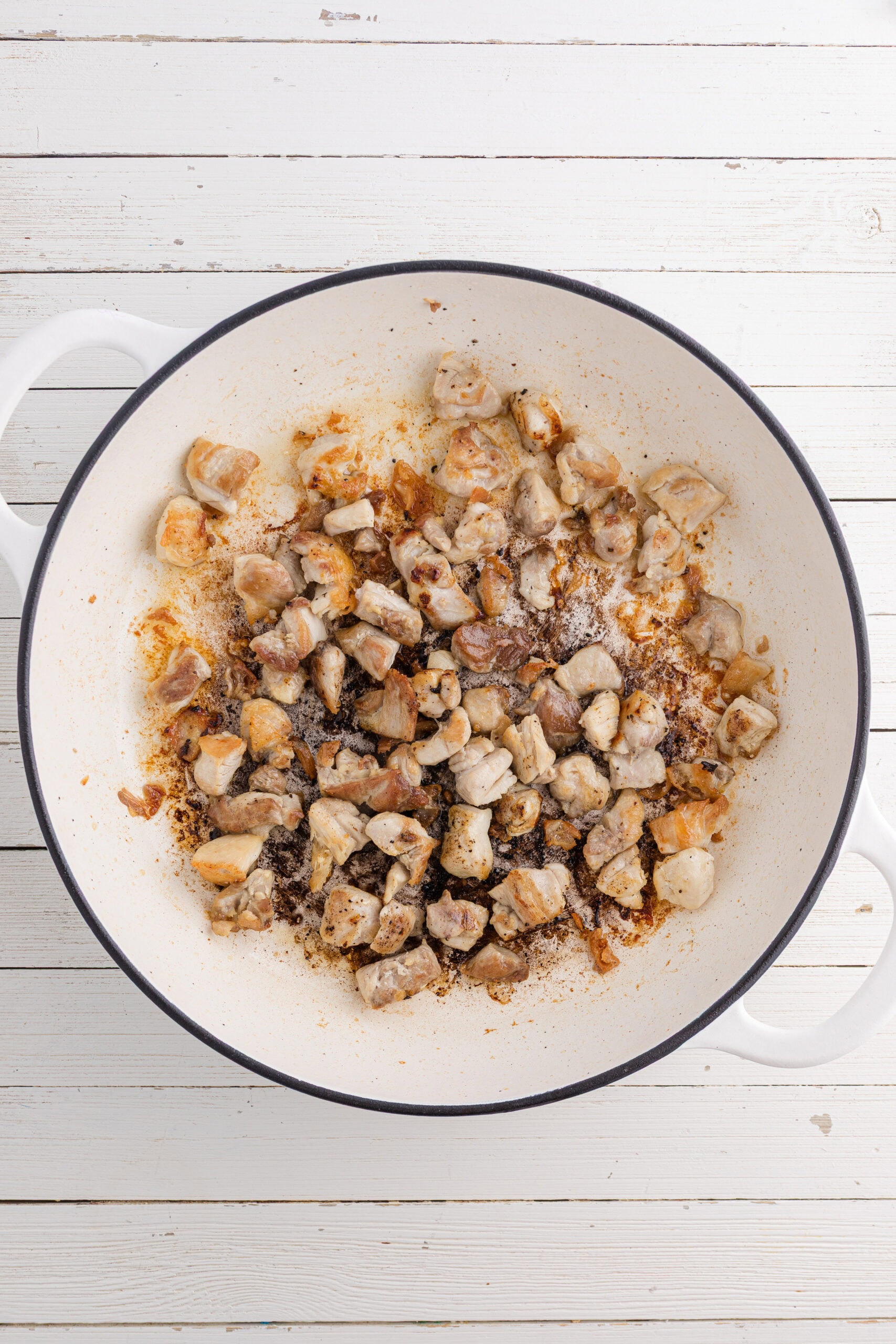
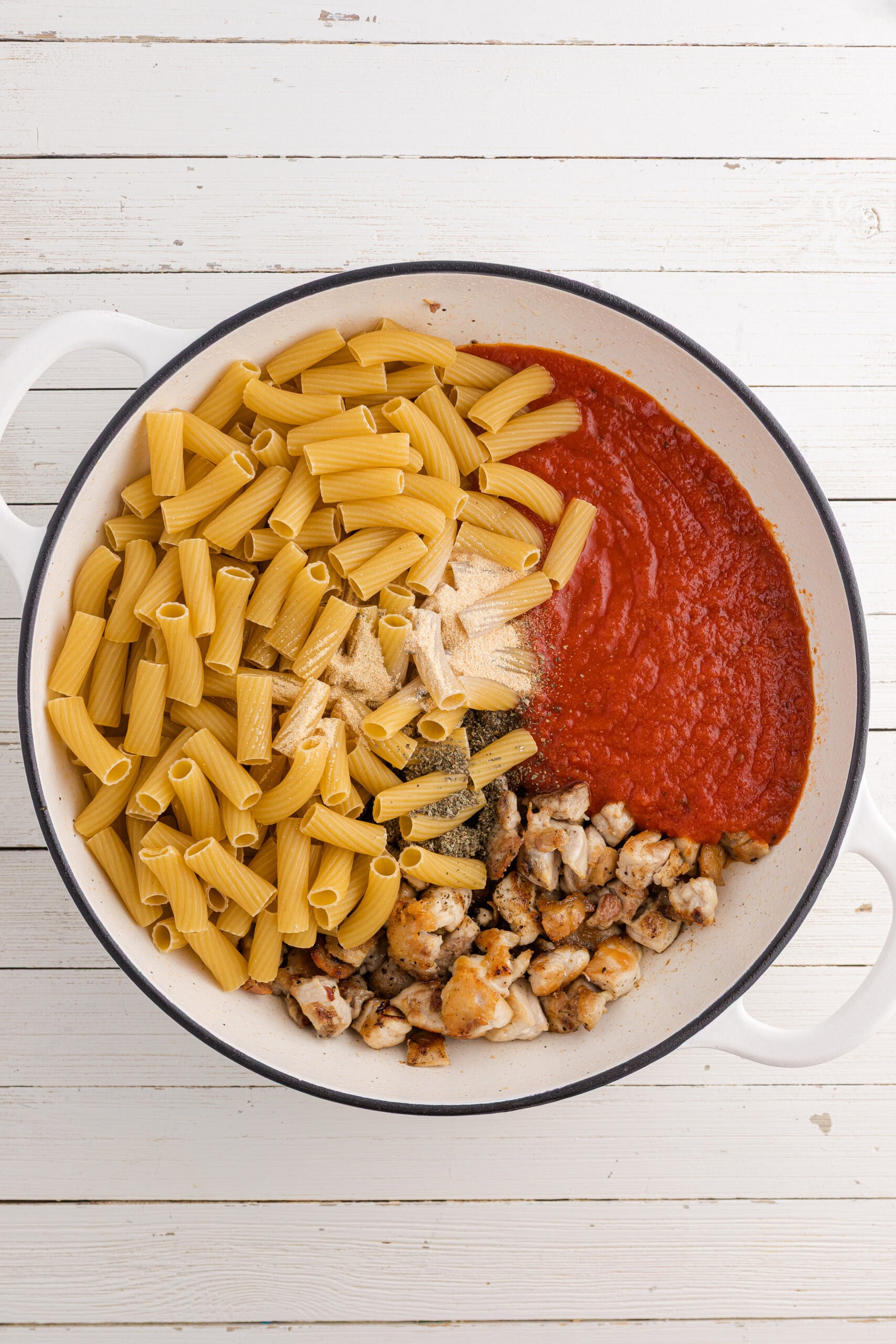
- Add the olive oil to a large deep skillet over medium-high heat. When the oil is hot (but not smoking), add the chicken and sauté for 5 minutes or until all sides have browned. Keep an eye on your thermometer. If the internal temperature of the chicken reaches 165ºF, take it off the heat. (It's okay if it doesn't reach that temperature after 5 minutes, because you're going to boil it anyway. You're mostly just browning the outside for flavor at this point.)

- Add the chicken broth, garlic, onion powder, Italian seasoning, marinara sauce, and uncooked rigatoni pasta to the skillet. Stir everything together. Make sure all the noodles are covered in liquid.
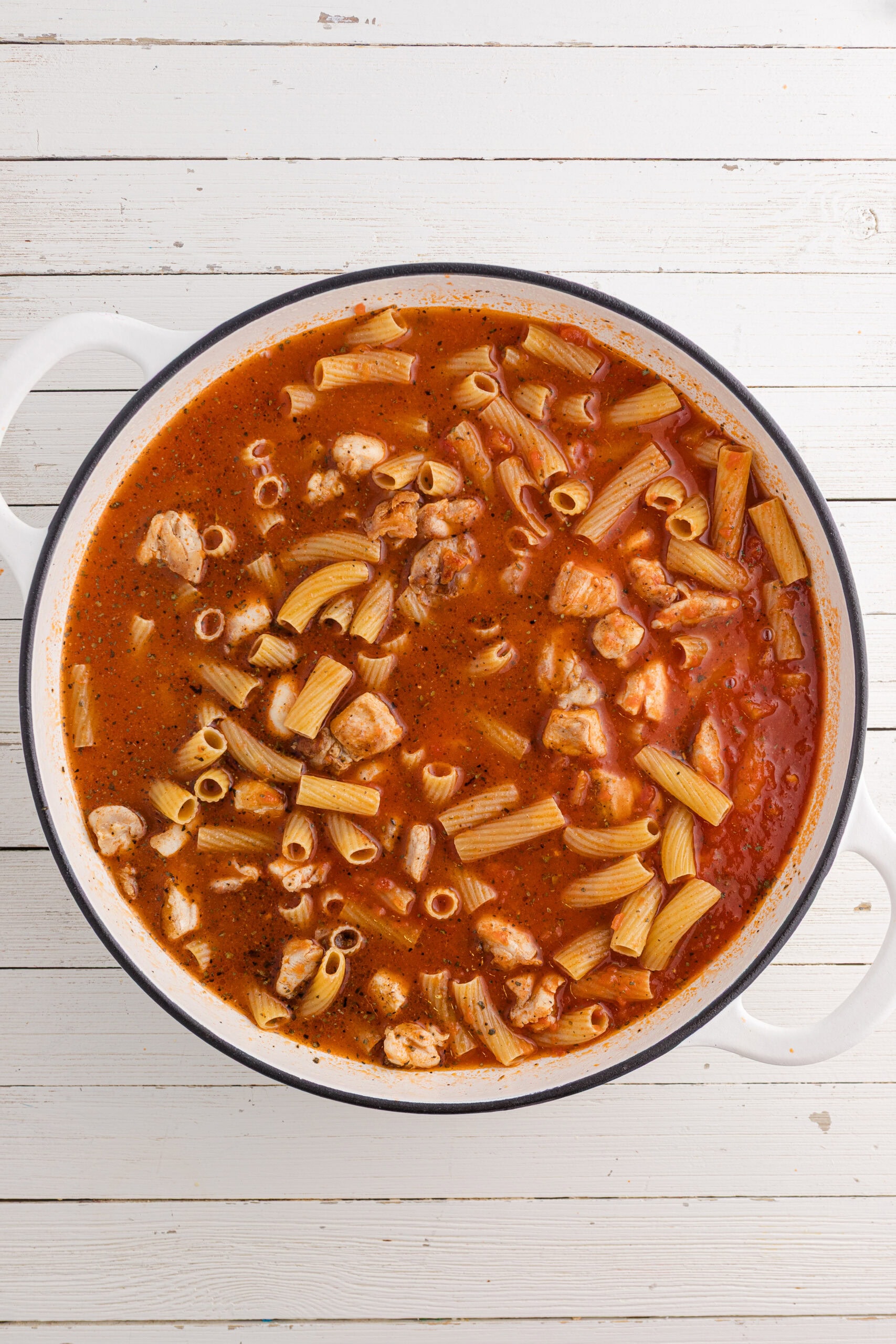
- Bring everything in the skillet to a boil, then cover the pan and reduce heat to a low simmer. (Simmer means small bubbles but not a full, rolling boil.) Simmer for 11-13 minutes or until noodles are soft, stirring occasionally to ensure even cooking.
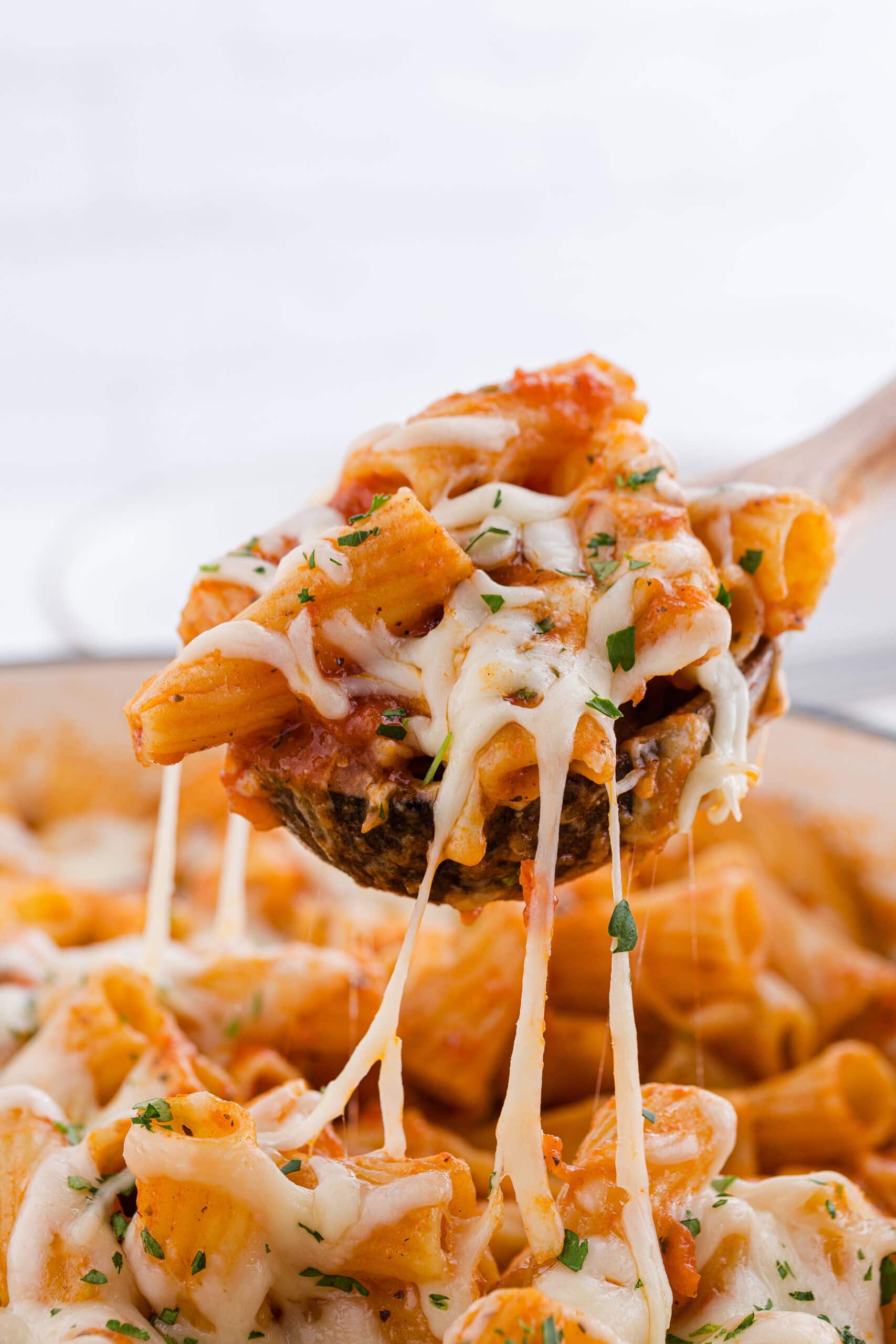
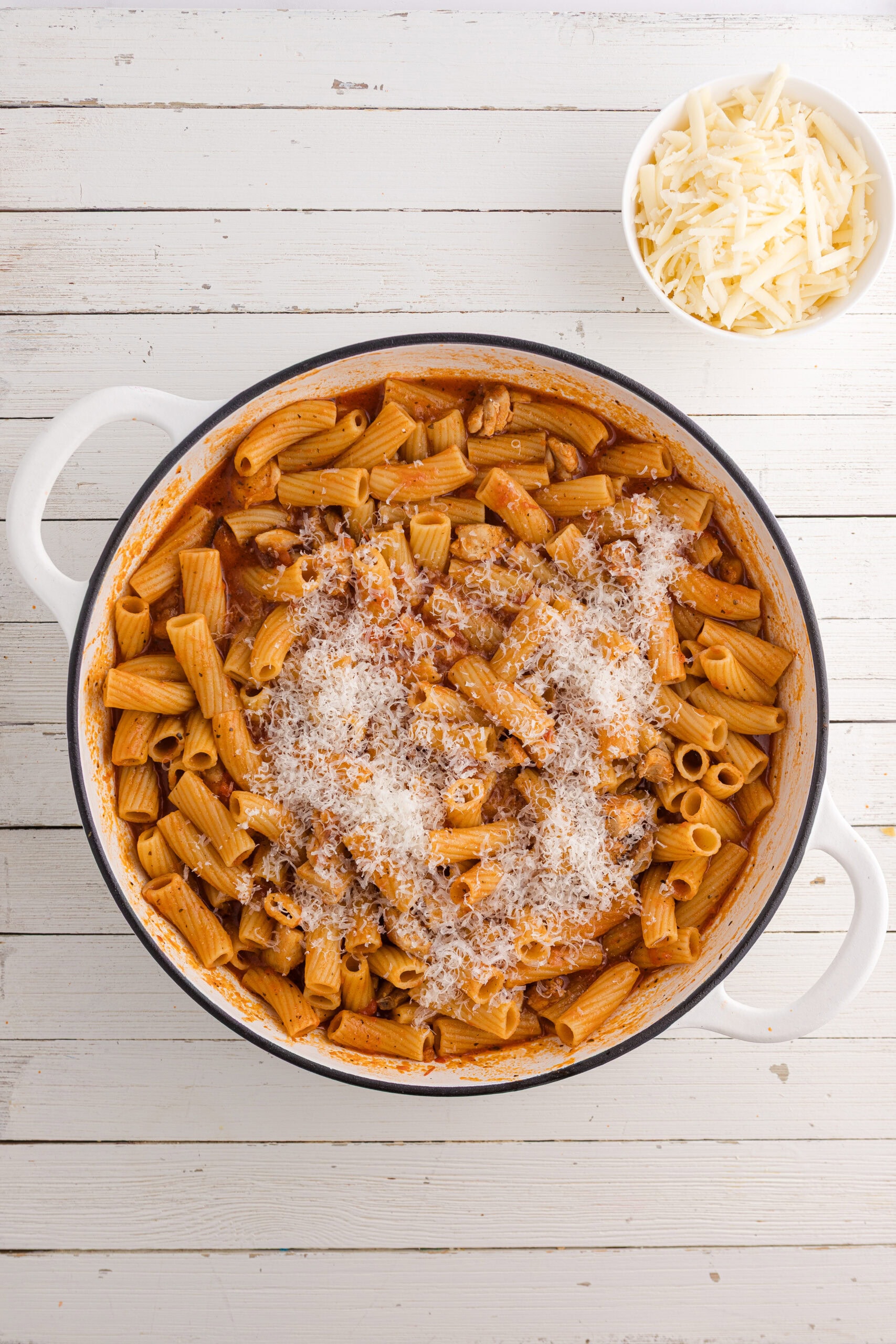
- Once noodles are cooked, take the pan off the heat and stir in the parmesan cheese.
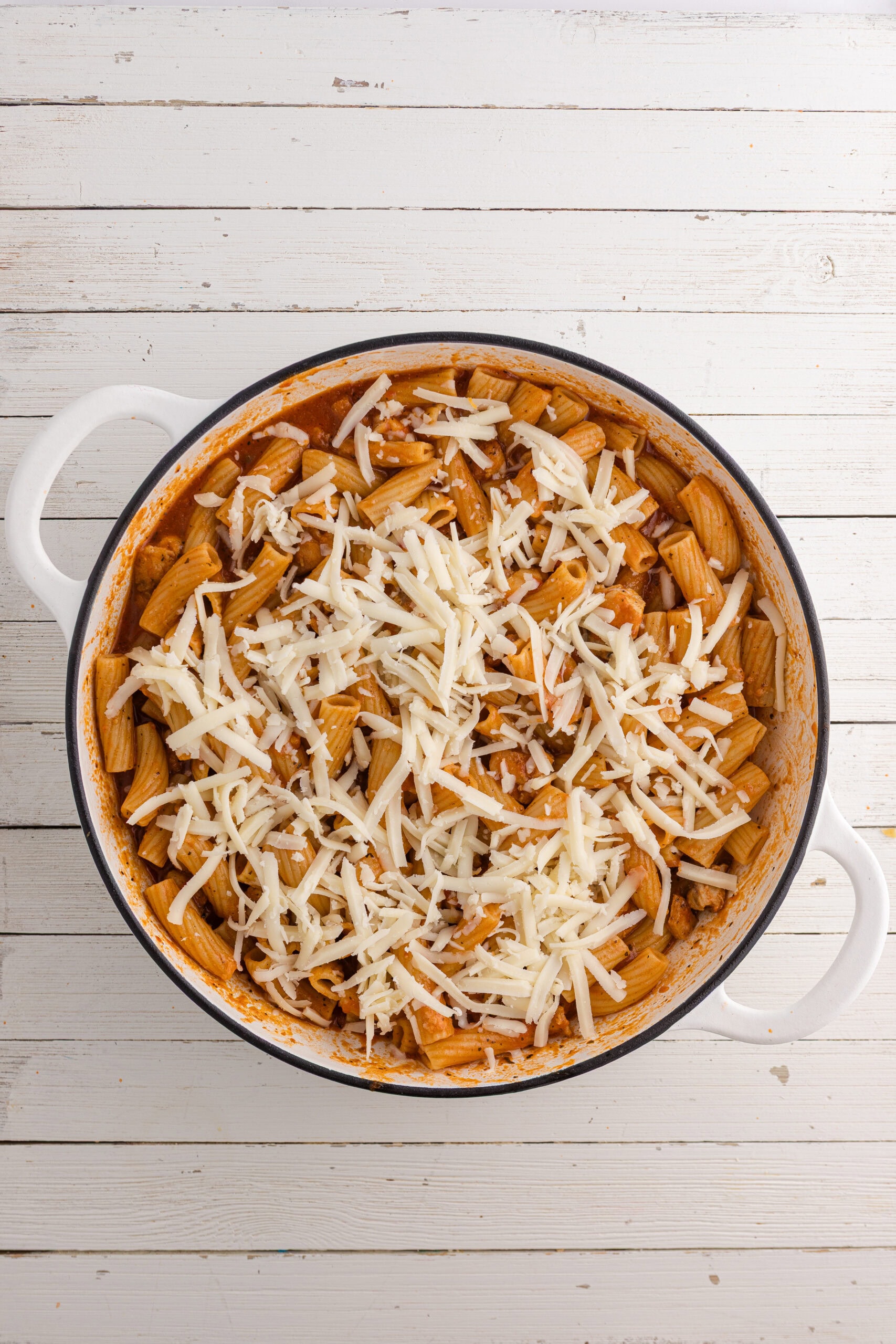
- Sprinkle mozzarella cheese over the top and cover so that the cheese can melt.
- Garnish with minced parsley or fresh basil and serve with garlic bread, if desired.
Substitutions and variations
Being that this is chicken parmesan pasta, I make it with bite-sized pieces of chicken. You could use boneless skinless chicken breasts, as I mentioned above, but they tend to get dry and rubbery when they are overcooked even slightly, and the chance of overcooking is high since you have to simmer the sauce long enough to soften the pasta. I prefer to use boneless skinless chicken thighs because they hold up to the heat better and don't get rubbery as quickly. (This is because they have a higher fat content, if you're wondering.)
If you don't care about the chicken parmesan part of the recipe and just wanted to make a cheesy pasta dish, you could use Italian meatballs, Italian sausage cut up in 1-inch pieces, or even loose ground beef, pork, or sweet or hot Italian sausage. If using loose meat, you'll want to brown it in the pot at the beginning, just as I did with the chicken thighs.
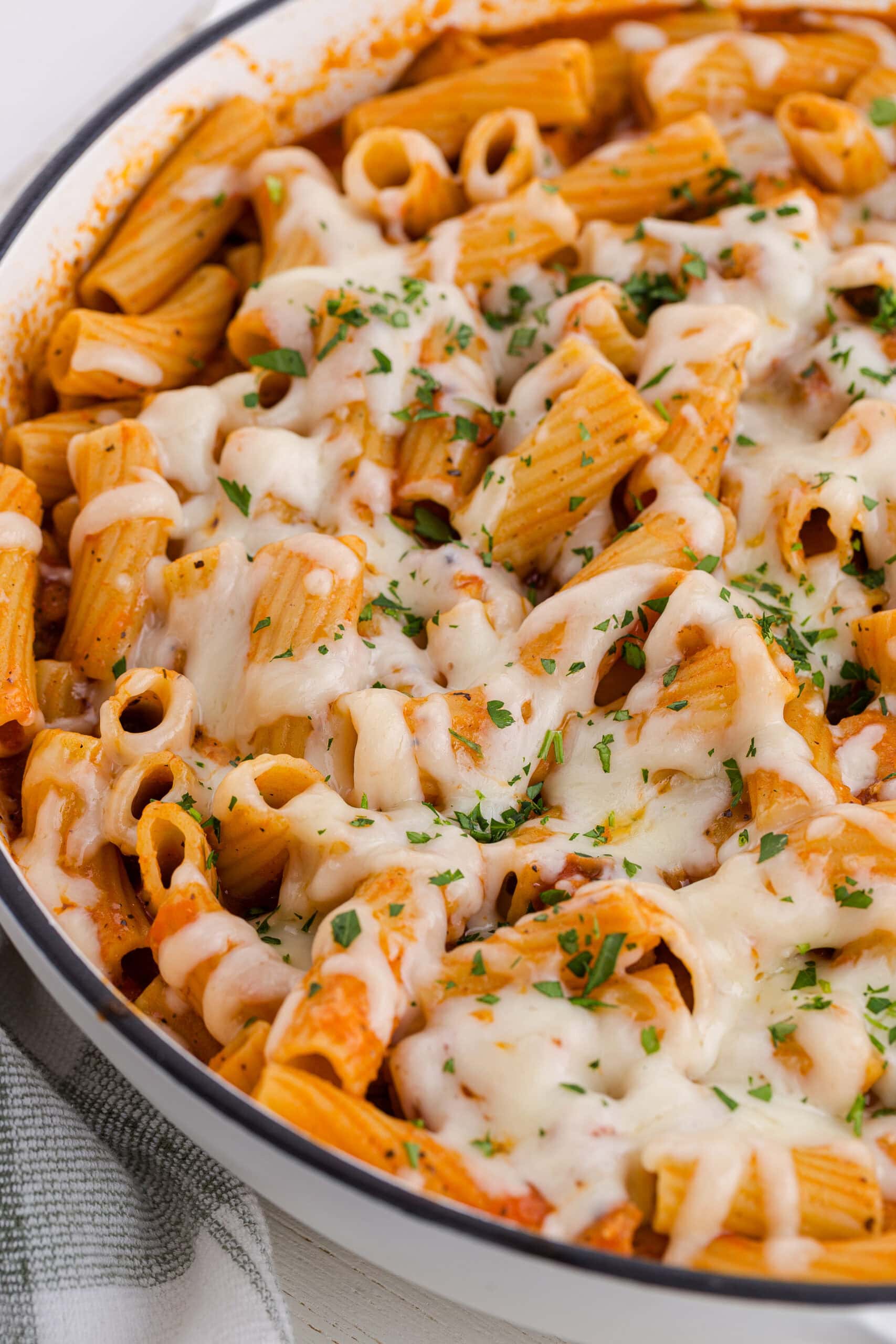
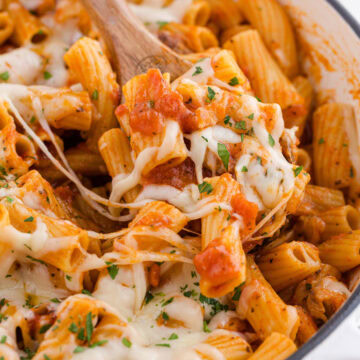
We have used rigatoni in our photos, but you can use any short or long pasta shape in a one pot pasta dish. Tube shapes hold the sauce nicely, but most shapes will work. Even wagon wheels or radiatore would be okay! The only shape that will not work as well is a very fine pasta such as angel hair. Those tend to clump in a recipe like this where the pasta is not cooked at a rolling boil.
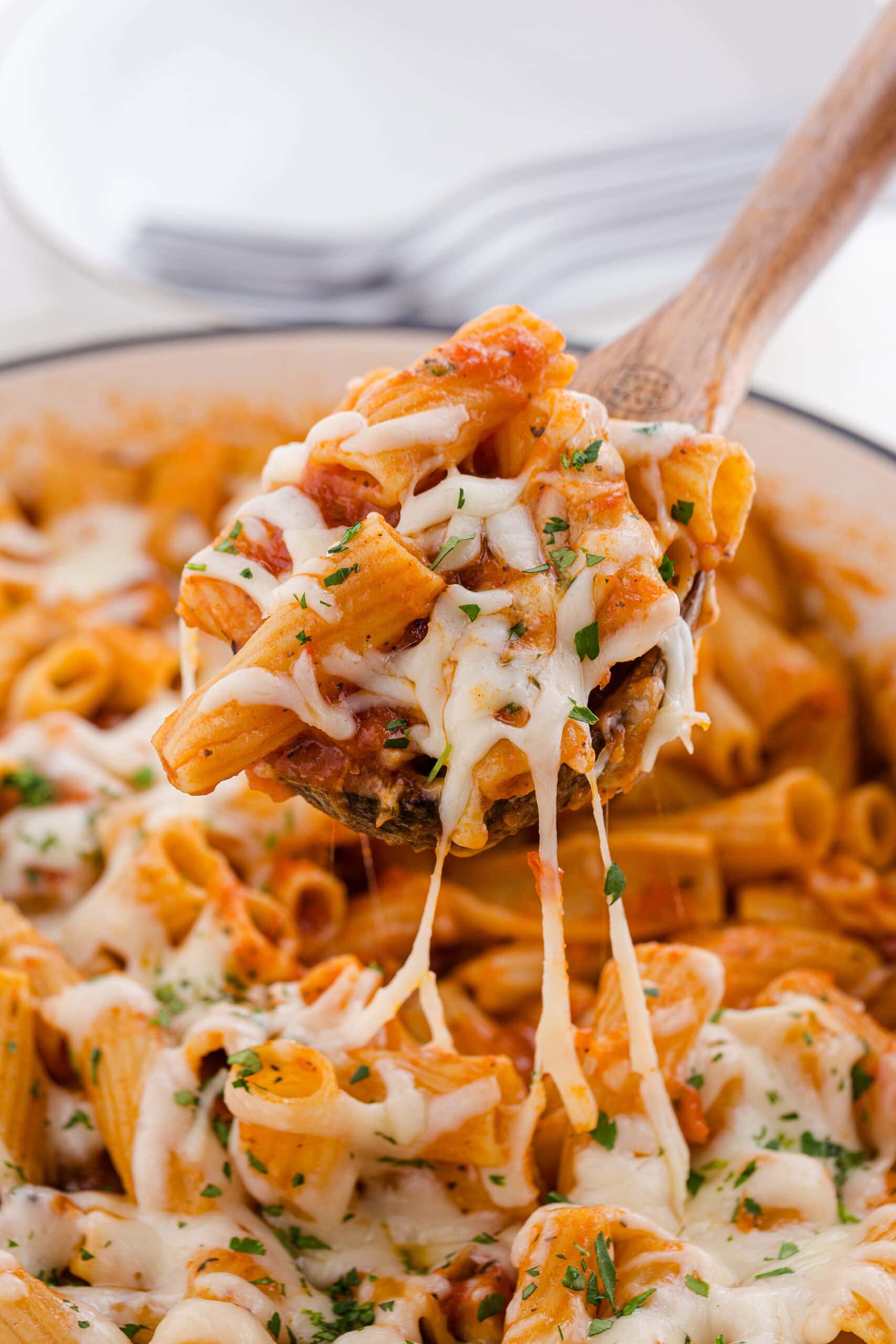
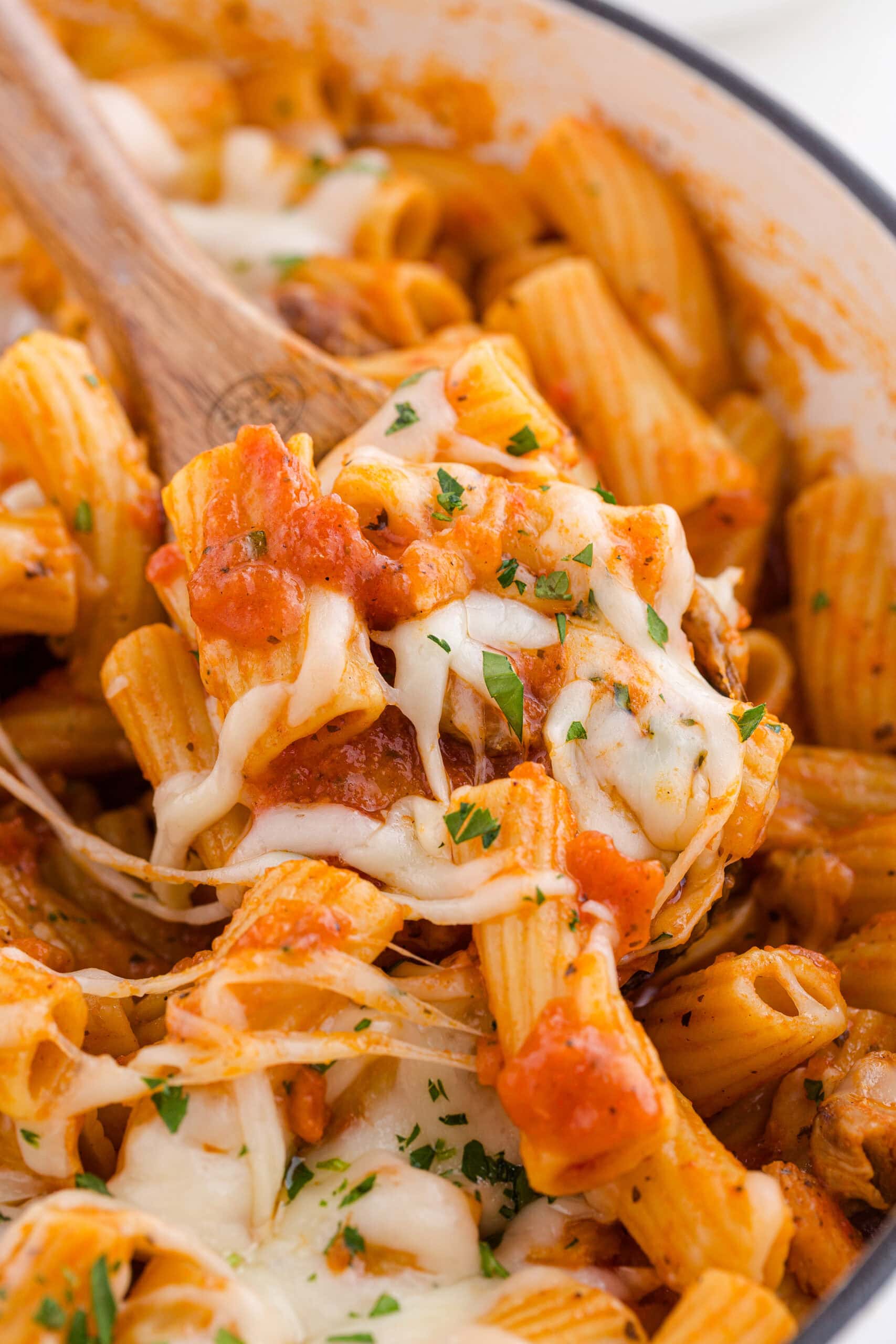
You can use whatever cheese you want. I like to stir the Parmesan through the pasta and then top with a melty cheese, but you don't have to stick to mozzarella. As noted above, an Italian cheese blend is great, and any melty cheese from cheddar to pepper jack will work really well.
If you want to add a little extra heat to the pasta, feel free to stir in a teaspoon or two of crushed red pepper with the other spices. Add a little to start, stir it in well, and then taste it. Only add more after you've tasted the sauce.
Feel free to add veggies. You can sauté sliced mushrooms and diced onion with the chicken and/or you can toss in a couple handfuls of fresh spinach after the pasta has cooked. I've even added fresh broccoli florets with the uncooked pasta. It's delicious!
You can make chicken parmesan pasta gluten-free by using gluten-free pasta.
To make chicken parmesan pasta vegetarian, skip the chicken or use a meat substitute like seitan and use vegetable broth instead of chicken broth. If you skip the meat without using seitan or another protein source, you will probably want to add veggies (see two paragraphs up for suggested vegetables).
What to serve with chicken parm pasta
I like this recipe with garlic bread or cheesy garlic bread. (I buy the Texas Toast brand in the freezer section of my grocery store and sprinkle Italian blend shredded cheese on it right before baking.)
For a side, any fresh vegetable will be great. I have served this with roasted asparagus, roasted brussels sprouts, roasted carrots, or sauteed green beans.
Storing leftovers
Transfer fully cooled leftovers to an airtight container and store in the refrigerator for up to 3 days.
You can also freeze chicken parmesan pasta. Transfer fully cooled leftovers to an airtight freezer container and store in the freezer for 3-4 months. Thaw overnight in the fridge before reheating on the stovetop or in the microwave.
More delicious one pot meals
- World's Best Chili with Bacon
- Green Chili Chicken Soup (Stovetop or Crockpot)
- Balsamic Mushroom Chicken
- Chicken Piccata with Zucchini Noodles
- Steak Tostada Salad
- Kung Pao Beef
- Chicken and Veggies with Peanut Stir Fry Sauce
- Chicken and Peaches Stir Fry
- Spinach Pasta with Creamy Red Sauce
- Creamy Chicken Enchilada Soup
- Easy Black Bean and Beef Chili
- Leftover Ham and Rice with Apples
Recipe
One Pot Chicken Parmesan Pasta
Ingredients
- 3 tablespoons olive oil
- 24 ounces boneless skinless chicken thighs cut into 1-inch pieces
- 3½ cups chicken broth
- 2 cloves garlic
- 1 teaspoon onion powder
- 1 tablespoon Italian seasoning
- 24 ounces marinara sauce
- 16 ounces rigatoni pasta uncooked
- ½ cup Parmesan cheese grated
- 1 cup mozzarella cheese shredded
- 1 bunch fresh parsley minced, optional for garnish
Instructions
- Add the olive oil to a large deep skillet over medium-high heat. When the oil is hot (but not smoking), add the chicken and sauté for 5 minutes or until all sides have browned. Keep an eye on your thermometer. If the internal temperature of the chicken reaches 165ºF, take it off the heat. (It's okay if it doesn't reach that temperature after 5 minutes, because you're going to boil it anyway. You're mostly just browning the outside for flavor at this point.)
- Add the chicken broth, garlic, onion powder, Italian seasoning, marinara sauce, and uncooked rigatoni pasta to the skillet and stir everything together. Make sure all the noodles are covered in liquid.
- Bring everything in the skillet to a boil, then cover the pan and reduce heat to a low simmer. (Simmer means small bubbles but not a full, rolling boil.) Simmer for 11-13 minutes or until noodles are soft, stirring occasionally to ensure even cooking.
- Once noodles are cooked, take the pan off the heat and stir in the parmesan cheese. Sprinkle mozzarella cheese over the top and cover until the cheese has melted. Garnish with minced parsley, if desired.


Lucy Hoffman says
I was skeptical that the pasta would cook properly, but I gave it a chance anyway. I'm glad I did. We all loved it!